
Ritholtz makes the definitive case that 2008 wasn't a black swan — it was the inevitable endpoint of forty years of privatized gains and socialized losses.
Essential reading for anyone trying to understand how 2008 was built, not just how it broke. Ritholtz traces the moral hazard accumulation from Nixon through Greenspan's LTCM put to Bernanke's interventions — each rescue rational in isolation, collectively catastrophic. One of the few crisis books that explains the why rather than just narrating the sequence.
Full thesis
Ritholtz traces the moral hazard accumulation from Nixon's gold-window closure through the S&L bailout, Greenspan's LTCM put, and Bernanke's 2008 interventions. Each rescue was rational in isolation but collectively created the expectation that large financial institutions would never be allowed to fail. That expectation changed the risk calculus on Wall Street — and the next crisis was built in. The book doesn't just diagnose what happened; it shows how institutional memory of past rescues shaped the decisions that led to the next one.
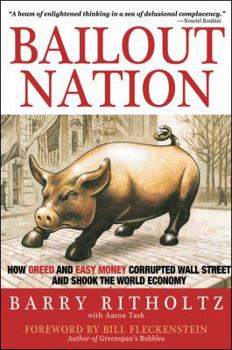
I chose accounting because I thought it was recession-proof. Did well enough to land a Big 4 job right out of school, which was the ideal path forward with an accounting degree. Lehman Brothers was a client of the firm — not mine personally, but a large, prestigious client that brought revenue and job security to everyone in the building. I was supposed to be in the safest seat in finance — and then the financial crisis came for me anyway. We saw layoffs across the firm. If the great financial crisis could reach early career staff in Big 4 accounting, nothing was insulated.
That's why this book landed the way it did. Ritholtz's argument is that 2008 wasn't a black swan — it was the predictable output of a system that had been quietly rewarding recklessness for decades. He traces the moral hazard problem back to 1971, when the federal government bailed out Lockheed and established the template: if you're big enough, failure isn't really on the table. Chrysler, Continental Illinois, the S&L crisis, LTCM — each episode teaching the same lesson. Scale up, take the risk, collect the upside, and when it unravels, call it systemic and send the bill to the taxpayer. Privatized profits, socialized losses, dressed up as crisis management.
What surprised me most was the sheer volume of large corporate bailouts that had already happened before 2008. Most people treat TARP like it was unprecedented. It wasn't. It was just the largest installment in a series that had been running for forty years. Ritholtz makes that lineage impossible to ignore.
The financial crisis hit during my formative years and shaped how I think about risk in a way I still carry. For a long time it made me feel like the next one was always just around the corner — that hyper-vigilance was the only rational response to what I'd seen. That's a real cost. Staying cautious through years of a compounding bull market because you were burned early is its own kind of financial damage.
Read this book as a history lesson and a useful lens on what could be. The moral hazard Ritholtz documents is real and the incentive structures haven't fundamentally changed. But don't let that awareness become black swan paralysis. Time and compounding work through even the worst crises. The market recovered from 2008. It will recover from whatever comes next. The lesson isn't to stay out — it's to go in with your eyes open.